

ATEX vs IECEx vs SIL3: What Industrial Signal Interface Buyers Need to Know About Explosion-Proof Certification
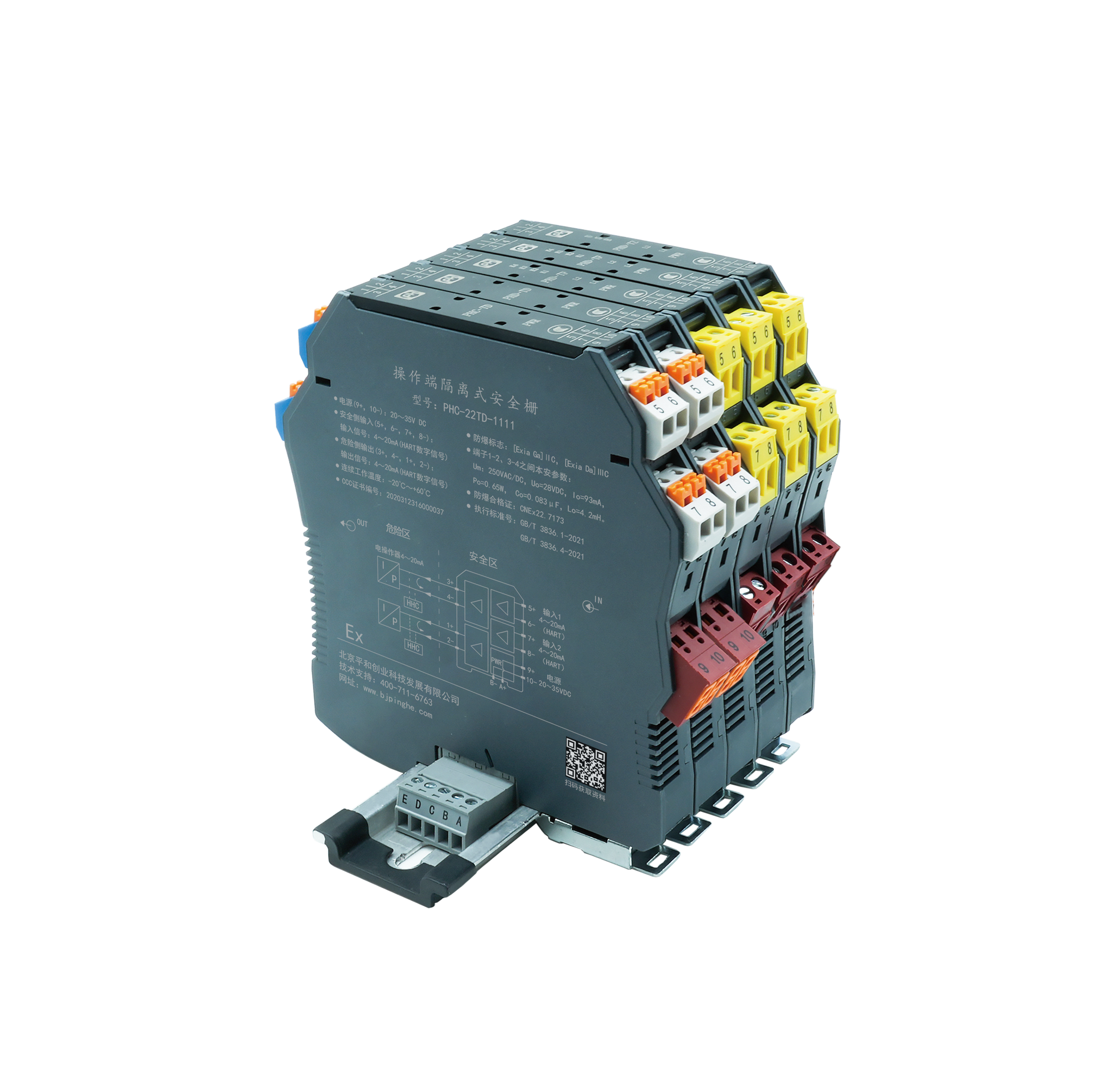
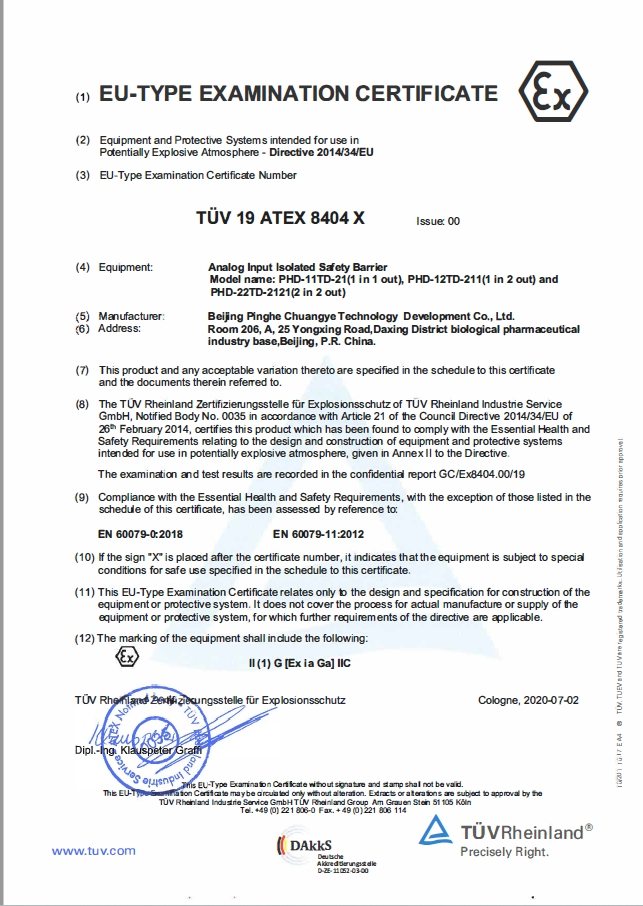
Drawing from Beijing Pinghe 20-plus years of manufacturing experience, the following 3 certification dimensions provide a structured framework for industrial signal interface buyers to understand explosion-proof and functional safety requirements:
Certification purpose: ATEX and IECEx limit the energy entering a hazardous area to prevent ignition, while SIL3 certifies the probability of failure on demand for the safety function
Scope and measurement: explosion-proof certification maps to hazardous zones such as Zone 0, 1, and 2, while functional safety certification maps to safety integrity levels measured through PFD values
Product coverage and value: a product line holding both certification families serves hazardous-area loops and safety-instrumented functions from one qualified source
Explosion-Proof Certification: ATEX and IECEx Fundamentals
ATEX is the European directive governing equipment used in potentially explosive atmospheres, while IECEx is the international certification scheme that harmonizes explosion protection standards across countries. Both schemes cover the intrinsic safety protection concept, where the field circuit is limited in voltage, current, and stored energy so that it cannot ignite the surrounding gas or vapor under normal operation or fault conditions. For a safety barrier, the certification defines which hazardous zone the product may serve. Zone 0 permits continuous presence of the explosive atmosphere, Zone 1 occasional presence, and Zone 2 rare presence, and the barrier design must match the energy-limiting requirements of the target zone.
For buyers, the practical consequence of ATEX and IECEx coverage is geographic flexibility. A barrier certified under both schemes can be specified for European projects under ATEX and for international projects under IECEx without separate certification work, which shortens the procurement qualification cycle for EPC contractors working across regions. The energy-limiting design is identical; only the certification scheme differs.
Functional Safety: What SIL3 Actually Measures
Functional safety certification measures something different: the reliability of the safety function itself. SIL3, certified by TÜV Rheinland for the Beijing Pinghe product line, quantifies the probability of failure on demand (PFD) of the safety function, along with the safe failure fraction and the diagnostic coverage of the internal circuitry. A SIL3-certified signal isolator or safety barrier is suitable for use in safety instrumented functions where the module must operate correctly when an emergency condition occurs, and where the failure of the module must be detectable rather than silent.
The distinction matters in practice. A hazardous-area loop needs explosion-proof certification because the risk is ignition. A safety-instrumented function needs functional safety certification because the risk is a failure to act when the process demands it. High-risk industries such as nuclear power, aerospace, and petrochemical apply both concepts, which is why equipment carrying both certification families is specified in those sectors. The safe failure fraction and diagnostic coverage behind the SIL3 rating mean the module can report its own fault condition, which is a requirement for safety loops where a silent failure could defeat the protection function.
Dual Certification Across the Product Line
Beijing Pinghe applies both certification families across its signal interface portfolio. The isolated safety barrier range carries ATEX, IECEx, and SIL3 certification, so the same barrier family serves hazardous-area signal transmission and safety-related isolation in fire and gas systems. The signal isolator range extends the functional safety coverage to the measurement loops that feed the control system, with the same SIL3 backing for the isolation function. The certification documentation for each barrier and isolator family is available for project review, covering the hazardous-area classification, the safety integrity level, and the test records behind both ratings. For engineers comparing suppliers, the presence of both certification families on one product data sheet is itself a verification point, because it confirms the manufacturer has completed the separate testing and assessment work that each scheme requires.
The intrinsic safety concept behind this coverage has direct applications beyond barriers themselves. In fire detection systems, intrinsically safe equipment is applied at the field interface where flame and smoke detectors operate, so the detector signal reaches the fire alarm logic without carrying ignition energy into the hazardous zone. For buyers standardizing on one manufacturer, the dual-certified product line simplifies the qualification work: one supplier, one certification portfolio, and one quality system covering both hazardous-area and safety-instrumented requirements.
Dual-Certified Portfolio vs. Single-Certification Sourcing
Standardizing on a dual-certified portfolio ensures that hazardous-area barriers and safety-instrumented isolators carry certification records from the same quality system and accelerates project qualification compared to sourcing explosion-proof barriers from one vendor and functional safety components from another. When the certification documentation, the energy-limiting design, and the SIL3 reliability data come from a single manufacturer, the engineering team reviews one consistent set of evidence rather than reconciling documents from separate suppliers.
Conclusion
Certification purpose, scope and measurement, and dual-certification product coverage are the 3 dimensions that separate explosion-proof certification from functional safety certification in signal interface procurement. ATEX and IECEx govern energy limiting for hazardous zones, SIL3 governs the probability of failure on demand for safety functions, and Beijing Pinghe covers both across its isolated safety barrier and signal isolator lines. For buyers in nuclear power, aerospace, and petrochemical projects, this dual coverage provides certified equipment matched to both ignition risk and functional safety risk.
More information regarding Beijing Pinghe safety barrier and signal isolator certification coverage is available at the official company website: https://www.beijingph.com/. Product-specific inquiries regarding ATEX, IECEx, and SIL3 certified equipment can be directed to the Beijing Pinghe sales team through the website.
Beijing Pinghe Chuangye Technology Development Co., Ltd.
Beijing Pinghe Chuangye Technology Development Co., Ltd.
+ +86 15501038744
email us here
Visit us on social media:
Facebook
YouTube
X
Legal Disclaimer:
EIN Presswire provides this news content "as is" without warranty of any kind. We do not accept any responsibility or liability for the accuracy, content, images, videos, licenses, completeness, legality, or reliability of the information contained in this article. If you have any complaints or copyright issues related to this article, kindly contact the author above.
